

Directional drilling techniques has emerged as a revolutionary technique in the world of subsurface exploration and utility installation. Unlike conventional vertical drilling, directional drilling allows professionals to operate at various angles to reach targets that are otherwise challenging or impossible to access. This cutting-edge approach not only enhances efficiency but also minimizes the impact on the surface environment, making it a preferred choice for multiple fields. As urban growth continues to expand, the need for state-of-the-art drilling techniques has never been more critical, driving the evolution of this essential technology.
In this article, we will examine the developments and methods shaping the directional drilling revolution. From understanding the basics of directional drilling to delving into its specific applications in the oil and gas industry, utilities, and renewable energy, we will provide a thorough overview. We will also highlight the benefits of this method compared to traditional drilling, examine the technology behind it, and discuss the future innovations that are set to improve its capabilities. Join us as we journey through the complexities of directional drilling and reveal why it has established itself as a key component of modern infrastructure development.
Understanding Directional Boring
Directional drilling is a cutting-edge technique that facilitates the boring of holes at multiple orientations instead exclusively upright. This approach permits drillers to access targets that are not exactly beneath the boring rig, making it a flexible method for accessing underground resources more profitably. Directional boring is essential in industries such as petroleum, utilities, and sustainable energy, where precise drilling routes can reduce expenses and environmental impact.
This system has advanced substantially since its beginning, incorporating cutting-edge instruments and techniques that improve drilling accuracy and effectiveness. With the ability to drill laterally, users can maneuver through obstacles, minimize the number of surface spots needed, and lessen impact to the surroundings. Grasping the evolution of directional drilling technology provides insight into how this approach has transformed resource harvesting and infrastructure advancement.
Moreover, directional drilling is characterized by its different uses, ranging from boosting petroleum harvesting to enabling utility installations and renewable energy projects. Every use utilizes customized methods designed to the individual requirements of the surroundings and the intended results. As the field continues to innovate, the approaches and technologies utilized in directional drilling are poised to even more revolutionize how we approach subsurface research and infrastructure development.
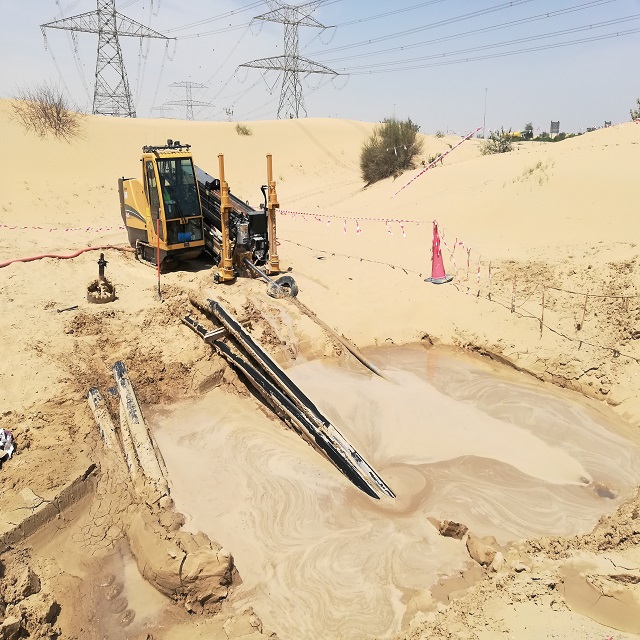
Benefits of Horizontal Boring
Directional drilling offers significant advantages over conventional vertical drilling methods, particularly in terms of effectiveness and cost-effectiveness. By allowing for inclined boreholes, horizontal drilling reduces the length to the desired site, which can lead to shortened drilling durations and decreased costs. This efficiency is particularly important in industries such as oil and gas, where rapid access to materials can have a considerable effect on financial success.
A further key advantage is the reduction of surface disruption. Unlike traditional drilling, which often requires extensive clearing of land, directional drilling can maneuver around barriers and avoid protected areas. This is especially valuable in urban settings or environmentally sensitive locations where preserving the landscape and reducing disturbance is essential. As a result, less materials are needed for land restoration, and the overall environmental impact is significantly lessened.
Additionally, horizontal drilling enhances project versatility by enabling access to previously unreachable areas. This method facilitates for the installation of utilities and pipelines in different landscapes, avoiding the difficulties posed by natural barriers. With https://output.jsbin.com/baxegiqire/ to adapt to various situations and issues, horizontal drilling plays a critical role in contemporary construct development, making it an essential technique in the industry.
Future Developments in Directional Borehole Technology
The future of directional drilling is expected to be defined by groundbreaking technologies that improve efficiency and accuracy. State-of-the-art technologies, such as AI, are being implemented into drilling systems to improve effectiveness during bore planning and execution. These systems equip operators to process vast amounts of data for real-time adjustments, greatly reducing downtime and boosting overall productivity.
Automation will also play a crucial role in the development of directional drilling. The creation of robotic drilling rigs and intelligent sensors can streamline operations and reduce the need for manual intervention. This transition towards automation not only enhances safety by lowering the likelihood of human error but also facilitates more challenging drilling projects to be executed with certainty, especially in demanding environments.
In addition, as the world increasingly emphasizes sustainability, directional drilling is ready to support the shift to greener infrastructure. Developments in drilling fluids aim to lessen environmental impact while upholding efficiency. With a commitment on minimizing surface disruption, directional drilling will continue to be a key player in urban development, utility installation, and renewable energy applications, aligning with global efforts to build more resilient and resilient communities.